



“You would think Malagasy people are hated by God,” our guide joked as we landed in Antananarivo.
It was a dark joke, but one rooted in the grim reality of an island nation battered by a relentless cycle of natural disasters, failed governance and deepening hunger.
Madagascar has endured repeated bouts of extreme weather, persistent poverty and now political upheaval. A cyclone hit the north-west of the country just over a week before I arrived, the latest in a series of climatic shocks that have compounded an already fragile economy.
Driving from the airport to our hotel, life in the capital, affectionately known as Tana, appeared deceptively ordinary.
The city feels like a time capsule. Narrow roads are clogged with ageing cars, many dating back to the 1980s, traffic barely moves, and people hustle through their daily routines. Yet beneath this familiar urban rhythm, economic activity feels subdued, even by regional African standards.
For context, Madagascar’s gross domestic product stands at around $19.38 billion. Johannesburg alone, not South Africa as a whole, has a GDP of roughly $76 billion, almost four times larger.
I learnt that agriculture remains the backbone of the Madagascan economy, with some mining and limited tourism. But poverty is unmistakable, visible across the capital and far more severe when we travelled north to the coast.
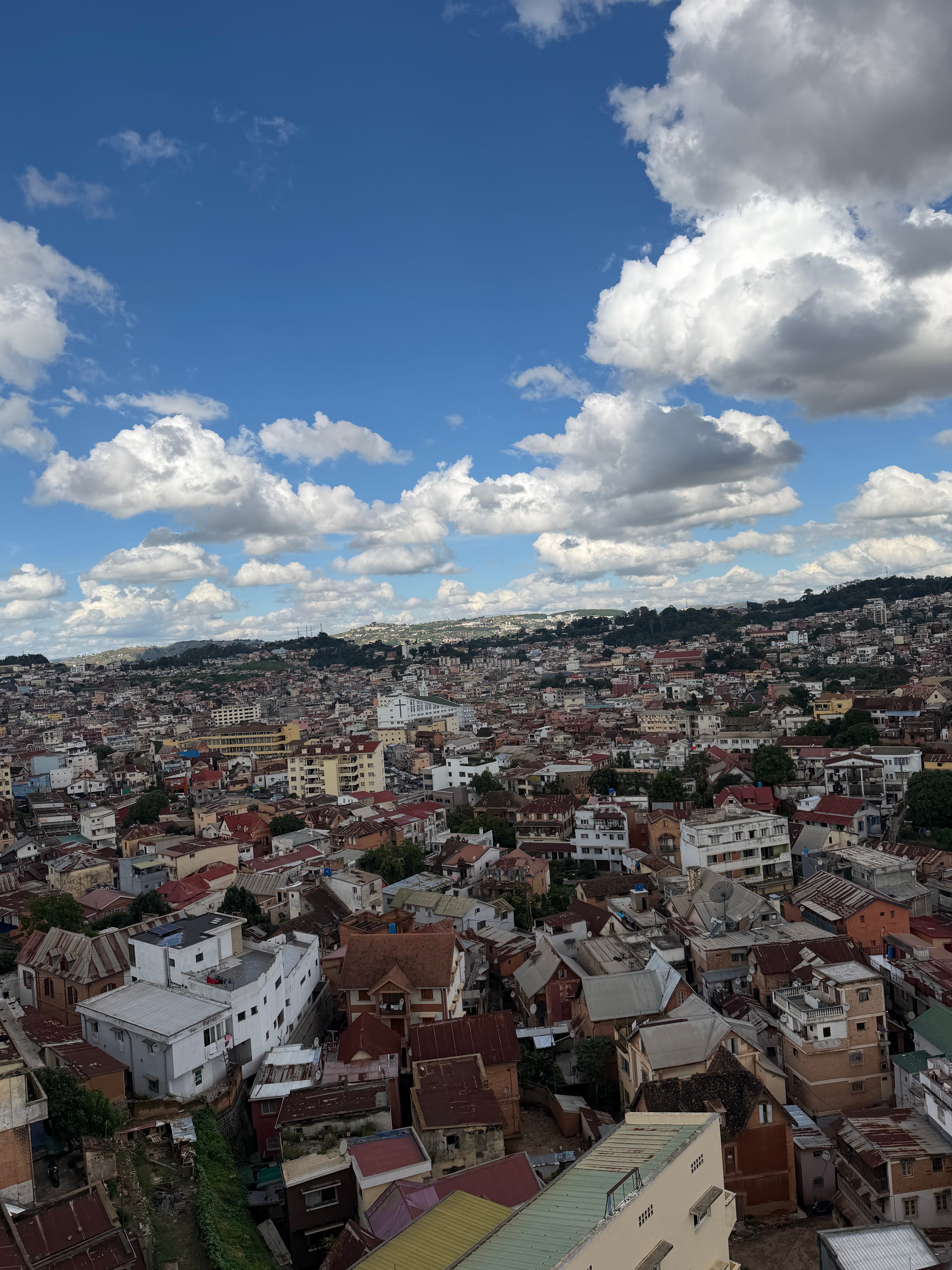
I came to Madagascar with two overlapping interests. The first was political. The country’s failure of governance and entrenched corruption culminated in the toppling of President Andry Rajoelina last October. The second was environmental. Madagascar’s vulnerability to climate shocks, underscored most recently by Cyclone Fytia, has turned the island into a case study in climate injustice.
As we crawled towards Hotel Le Fred, our driver pointed out two abandoned cable car stations which stand as monuments to state inefficiency under Rajoelina.
Once touted as Africa’s longest cable car system, the project was meant to symbolise Malagasy modernity and development. Instead, it became a symbol of elite disconnect.
I learnt that the cable car opened in August last year, costing the city almost $200,000 a month in electricity bills alone, in a place where reliable power supply is a luxury most residents have never known.
It begs the question that in a country where more than 80 percent of Malagasy people live below the poverty line, who would afford a luxury of a cable car.
While the project did not single-handedly trigger the protests that erupted in Antananarivo in September 2025, it crystallised public anger towards a leadership perceived as self-serving and indifferent.
As we drove past, we saw that the cable car buildings now sit empty as new authorities debate their fate.
Madagascar entered my political orbit last October when what began as a youth-led protest movement morphed into what resembled coup. But the label coup is still debated here and across the continent.
Inspired by global Gen Z mobilisation, young people organised through Facebook groups and other social media platforms, demanding accountability amid worsening living conditions.
The immediate spark was the violent arrest of opposition municipal councillors who had demanded Senate intervention on water and electricity shortages.
At the time, residents were enduring electricity cuts of up to 12 hours a day, alongside regular water outages.
The situation was grim- even for South African standards where we endured regular loadshedding.
According to the World Bank, more than half of businesses reported power outages last year, averaging over six outages a month and costing firms nearly a quarter of their annual sales.
The protests escalated when the military became involved.
By October, the parliament voted overwhelmingly to impeach Rajoelina, and the High Constitutional Court installed army chief Colonel Michael Randrianirina as president.
While the world raised their eyebrows, Randrianirina insists his rise to power was constitutional. The African Union disagreed and suspended Madagascar under its policy against unconstitutional changes of government.
I found it interesting that the Southern African Development Community (SADC) took a different approach.
It decided to engage and ended up supporting Randrianirina’s promise to restore democratic civilian rule within two years.
A month ago, Randrianirina briefed President Cyril Ramaphosa in Pretoria. That meeting angered many, particularly within the AU in Addis Ababa, where critics argued that South Africa should not legitimise an unelected government.
But for ordinary Malagasy people I spoke to in Antananarivo, the political drama felt distant. Life continued much as before. Power still rested with elites.
On the day I arrived in Tana, African Union Commission chairperson Mahmoud Ali Youssouf reaffirmed the AU’s support for Madagascar, citing a briefing from the organisation’s special envoy who reported progress on inclusive political dialogue and some positive economic indicators.
Whether Madagascar is readmitted to the AU will likely be debated when African heads of state meet later this month.
Experts I spoke to were less concerned with terminology and more with timelines.
Whether Rajoelina’s removal qualifies as a coup matters less, they said, than how quickly democratic civilian governance is restored. For most Malagasy people, these debates remain abstract. Survival is the priority.
Flying into Mahajanga with the Salaam Foundation, the devastation left by the cyclone was unmistakable. Southern Africa has been hit by extreme weather at the start of 2026.
We have covered flooding in Limpopo, Mpumalanga and Mozambique. But my journey to Madagascar was driven by a desire to tell the stories of people the world routinely forgets.
Global discussions about climate change often remain academic. Concepts like climate apartheid describe how the poorest populations suffer the worst impacts despite contributing almost nothing to global emissions. Madagascar is the embodiment of that reality.
Despite accounting for just 0.09 percent of global greenhouse gas emissions, Madagascar ranks among the five most climate-vulnerable countries in the world. Cyclones, droughts and erratic rainfall have devastated food systems. In Mahajanga, the consequences were raw and immediate.
Poverty was everywhere. The statistics are stark. An estimated 1.7 million people face acute food insecurity. More than 38 percent of children suffer from chronic malnutrition.
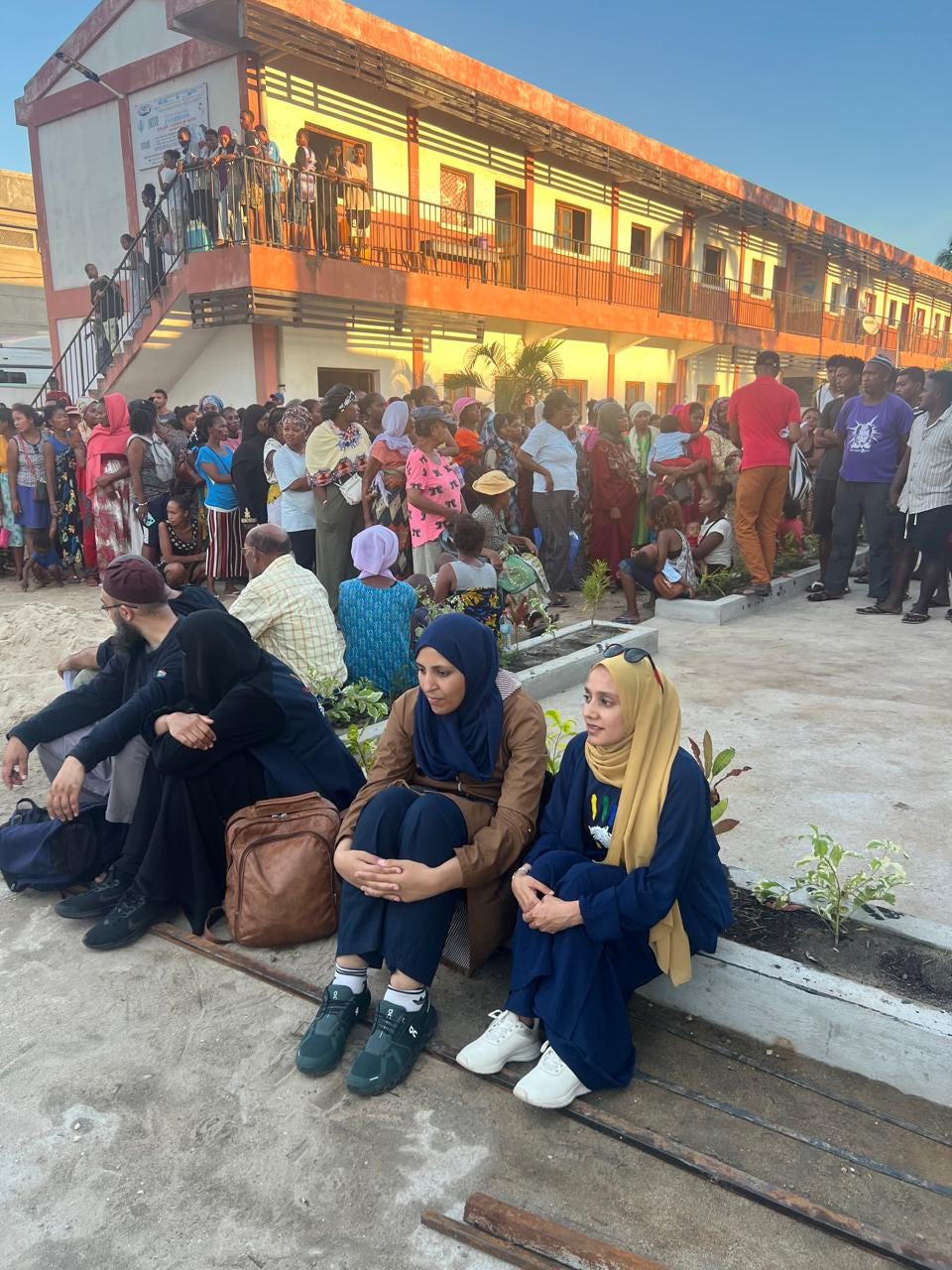
These numbers translate into scenes that stay with you. People waiting for hours for a 10-kilogram bag of rice. Others sweeping fallen grains from the ground to wash and eat.
Politicians and global leaders speak earnestly about climate resilience, climate-smart agriculture and renewable energy investments. These conversations matter. But for Malagasy families, food is not a far off policy challenge. It is a daily question of survival.
If there is a place where climate apartheid is not a theory but a lived reality, it is Madagascar.
And in a world increasingly obsessed with artificial intelligence and technological breakthroughs, the fact that dry rice remains scarce in places like this should trouble us deeply.
Madagascar deserves better from its leaders. It also deserves better from the world.
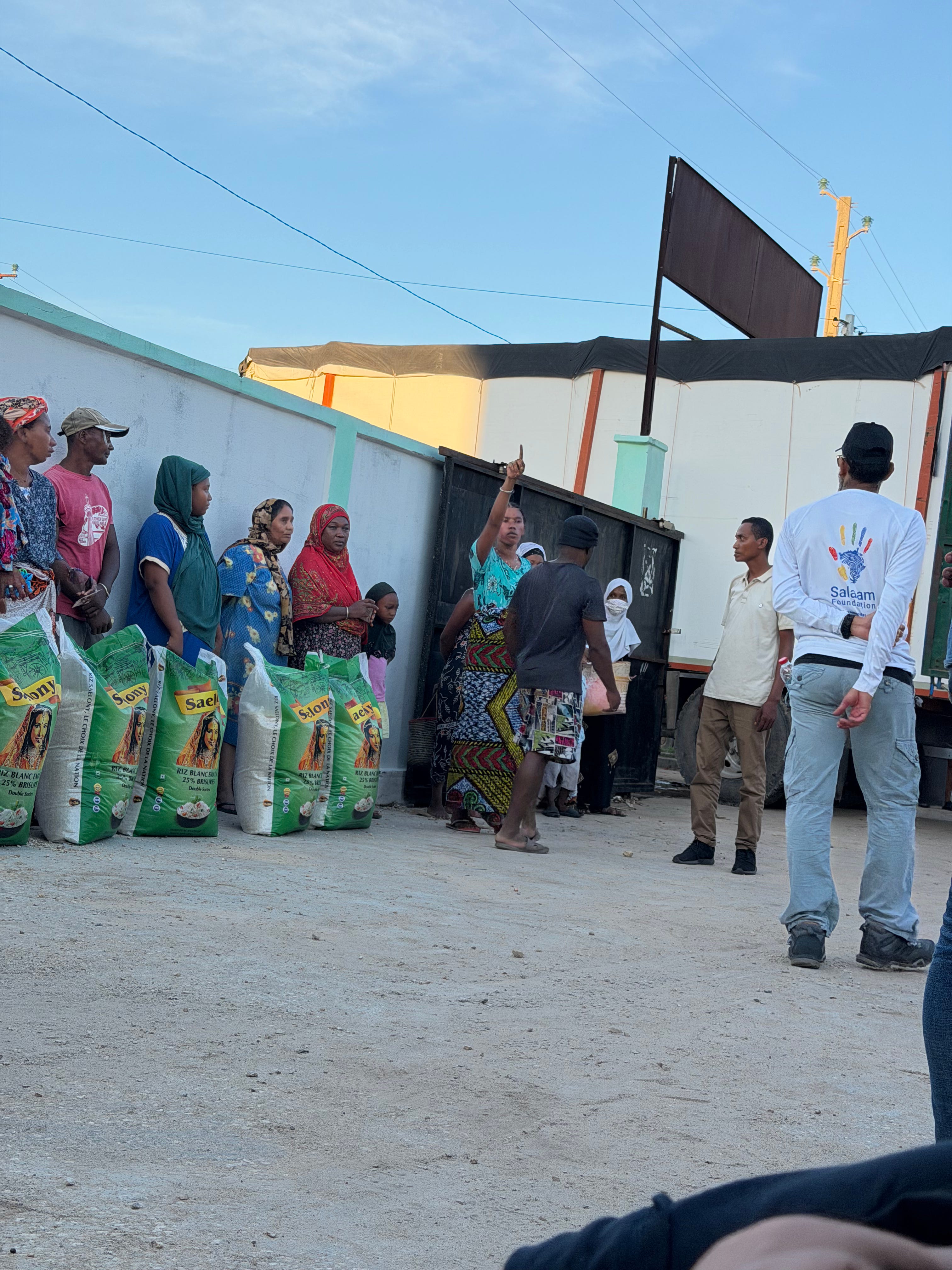
Qaanitah Hunter is the founding editor of The Debrief Network. Her trip to Madagascar was part of a humanitarian mission led and supported by Salaam Foundation. Find out more about Salaam Foundation’s efforts to reduce global hunger.


